Tee Box - Morgan
Morgan, Morgan, UT, 84050 · Morgan, UT
2 Bays
PuttView +1
Search 3,200+ indoor golf facilities across the US. Compare published simulator tech, pricing signals, lessons, and booking details where available before you choose a bay.
Search by location or brand, compare hourly rates and simulator tech, and go straight to the right listing when you're ready to book.
Find SimulatorsSearch by city, state, ZIP code, or simulator brand to surface nearby venues that match how you want to play.
Review equipment, hourly rates, amenities, and facility details so you can pick the right bay for practice, lessons, or group play.
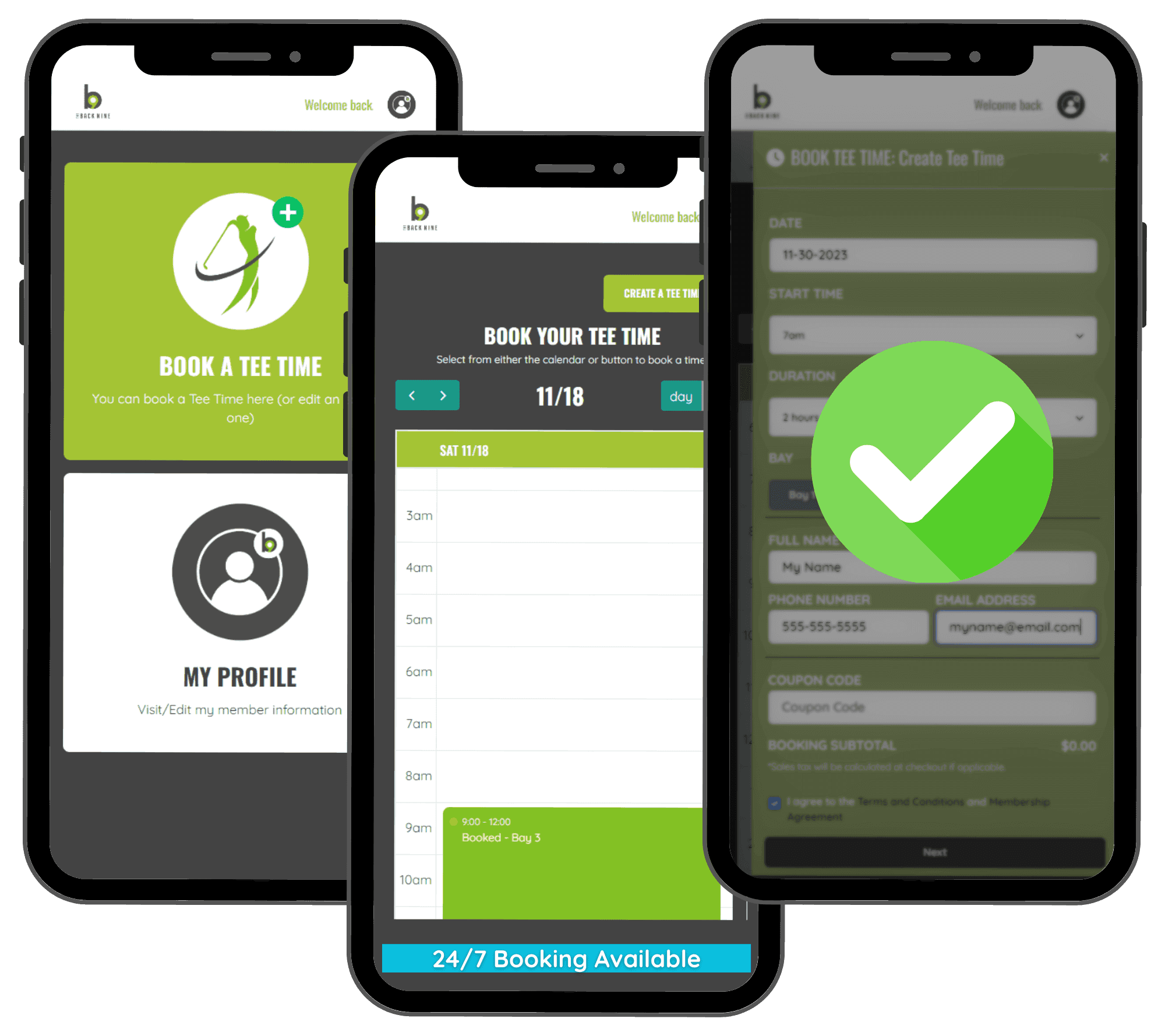
Visit the facility listing, confirm booking options, and reach out directly when you are ready to reserve your time.
See real facility listings with location, simulator, and booking details.
Explore active indoor golf markets and compare facilities near you.
Most golf simulators measure your swing and ball flight with radar, cameras, infrared, or multi-sensor systems. Knowing the difference helps you pick a facility that matches your goals, from precise shot data to a fun round with friends.
Garmin Approach R10
Radar measures motion to collect shot data. Indoor setups need the space and alignment specified for the launch monitor.
Bushnell Launch Pro
High-speed cameras measure the ball near impact. Simulator software uses those launch measurements to calculate the virtual flight.
Trackman 4, SKYTRAK ST+
These models combine radar and camera measurements. Capabilities vary by model, so check the facility’s equipment and available club data.
Modern launch monitors can track dozens of swing and ball-flight metrics. The numbers help show where a shot went wrong and what to work on next. Here are the key metrics facilities typically display:
Practice & improvement
Compare the club and ball measurements available at the facility, and ask whether a coach can help interpret them.
Entertainment & group play
For group play, compare bay capacity, available courses, game modes, and the facility’s current rates.
Club fitting
Camera-based systems like the GCQuad are common at fitting studios. They measure face angle, path, and loft precisely enough to match clubs to your swing.
Showcase your bays, simulator tech, coaching options, and booking details so local golfers can find the right fit faster.
Illustrative example. Sample data, not actual results.
Quick answers for comparing simulator venues, pricing, booking, and facility listings.
A golf simulator is an indoor golf setup that lets you hit real golf balls into a screen while sensors, cameras, or radar measure the shot. The system projects ball flight, distance, launch angle, spin, and other data onto a virtual range or golf course.
Search by city, state, ZIP code, or simulator brand on GolfSimIQ. Each listing is built to help you compare location, simulator technology, hourly rates, lessons, and booking details before you choose a facility.
Start with the launch monitor brand, hourly rate, bay setup, lesson availability, food or event options, and whether online booking is available. Premium practice and fitting bays often use TrackMan, Foresight, Full Swing, or Golfzon systems.
Most public indoor golf simulator bays cost about $25 to $75 per hour. Rates vary by city, simulator technology, time of day, membership status, and whether the venue is focused on practice, lessons, leagues, or entertainment.
Choose an indoor golf facility by comparing simulator technology, hourly rates, lesson availability, bay count, booking options, location, and the type of experience you want. Practice-focused venues may prioritize shot data, while entertainment venues may offer food, drinks, leagues, and events.
Indoor golf facility owners can submit a new listing or claim an existing facility profile on GolfSimIQ. A complete listing helps local golfers find simulator technology, pricing, lessons, amenities, contact details, and booking options in one place.
High-quality golf simulators can be very accurate when they are calibrated correctly and used with enough space. Radar-based systems often excel at tracking full ball flight, while camera-based systems are strong indoors because they measure impact conditions closely.
Yes. Indoor golf simulators let beginners practice without weather, pace-of-play pressure, or a full course commitment. Many facilities also offer lessons, club rentals, leagues, and group-friendly bays.
Yes. Golf simulators can show swing and ball-flight data such as launch angle, spin rate, carry distance, club path, and face angle. That feedback helps golfers understand misses, compare equipment, and work with coaches more effectively.